TeachAI: Transforming Teaching Practice through Artificial Intelligence is an 18-month Erasmus+ KA210-SCH Small-scale Partnership project (KA210-SCH-4A605A38), running from November 2025 to April 2027, with a total budget of €60,000. It brings together three partner organisations from Cyprus, Greece, and the Netherlands: Gymnasio Agiou Antoniou (coordinator), the Scientific Association for the Promotion of Lifelong Learning (SAPLLE), and Vechtstede College. The project responds to the growing need for teachers to develop competence in using AI tools within their classrooms, particularly in multicultural and diverse learning environments. Gymnasio Agiou Antoniou is characterized by significant multicultural diversity making inclusive, personalised education a daily priority. The partnership combines the school’s experience in multicultural education with SAPLLE’s expertise in educational technology and Vechtstede College’s advanced digital infrastructure. Through three transnational face-to-face training meetings, the creation of digital educational resources, and broad dissemination activities, TeachAI aims to equip teachers with practical AI skills and foster a European community of practice focused on responsible, inclusive, and innovative teaching.
- Digital Transformation: Focus on enhancing digital readiness and AI literacy in school environments.
- Inclusion & Diversity: Using AI to support multicultural student populations and personalized learning.
- Transnational Collaboration: Sharing expertise between Cyprus, Greece, and the Netherlands.
- Ethical AI: Strong emphasis on the responsible and critical use of technology.
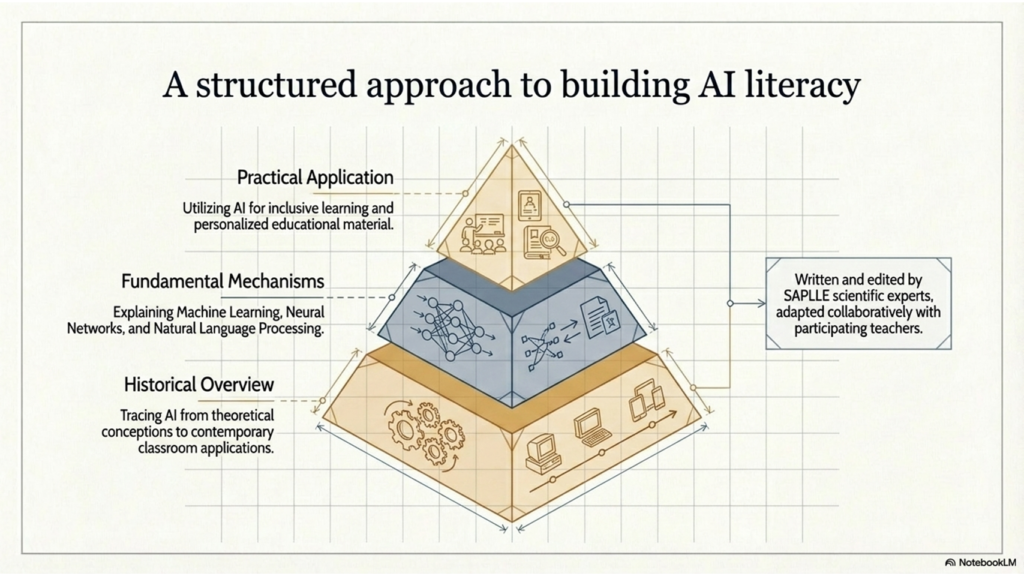
- Knowledge Building: To provide teachers with a deep understanding of AI concepts and their evolution.
- Skill Development: To train educators in using AI tools for lesson planning, content creation, and evaluation.
- Personalization: To utilize AI for developing inclusive materials that cater to students with different learning needs.
- Critical Thinking: To promote a culture of ethical and safe technology use in the classroom.
- Institutional Growth: To strengthen the digital capacity and European profile of the participating schools and organizations.

- Teacher Empowerment: Empowering teachers to pedagogically utilize Artificial Intelligence (AI) to modernize their teaching practices.
- Digital Readiness: Developing teachers’ digital skills and enhancing the digital readiness and resilience of the participating schools.
- Promoting Inclusion: Utilizing AI to create personalized and differentiated educational materials that support students from diverse linguistic and cultural backgrounds.
- Sustainable Networking: Establishing a sustainable transnational network of professional development that allows for the continuous exchange of ideas and good practices across Europe.
- Ethical Awareness: Developing critical thinking regarding the responsible and ethical use of AI technologies in an educational context.

- Primary Recipients: Teachers from the participating organizations who will receive direct training and support.
- Indirect Beneficiaries: Students aged 12–15 at the participating schools, particularly those from multicultural backgrounds or with fewer opportunities, who will benefit from personalized learning.
- Secondary Target Groups: Over 80 additional teachers within the partner schools who will benefit from dissemination activities and the materials produced.
- Wider Educational Community: Other schools, researchers, and education executives who can access the project’s good practices and educational materials.
- Local Community: Residents in the partner countries who will be informed about the possibilities of AI in education through dissemination events and local media.

- Research Survey: A questionnaire-based survey capturing the existing knowledge and attitudes of teachers regarding AI in education.
- Digital Multimedia Magazine: A resource covering the basic concepts and historical background of AI.
- Two E-books: Comprehensive digital guides on AI applications, tools for lesson preparation (Chatbots), and student assessment.
- Two Teacher Manuals: Practical guides featuring teaching scenarios for personalized/inclusive learning and guidelines for the responsible use of AI.
- E-Learning Platform: A comprehensive digital platform containing educational materials, training modules, and good practices.
- Project Website: A dedicated site for the dissemination of project results and information.
- Teaching Templates: A collection of ready-made assessment tools and templates that can be directly adapted by educators.
- Communities of Practice: Thematic online groups (for language, sciences, math, and social sciences) to facilitate ongoing collaborative learning.